

Action Plan on Mine Action for 2023–2026
On 4 April 2023, International Mine Awareness Day, the FDFA and the DDPS are jointly launching their new Action Plan for Mine Action, thereby carrying forward Switzerland's long-standing commitment in this area. The action plan focuses not only on implementation of the relevant conventions and support for the clearance of contaminated areas, but also on innovative approaches. In addition, Switzerland will provide targeted support to Ukraine in the coming years.
Humanitarian mine action can look back on great successes, including the adoption of two important international agreements in the last 25 years – the Ottawa (mines) and Oslo (cluster munitions) conventions. Their implementation has made a difference: so far, over 30 states have been completely cleared of mines, and in ten countries all residues of cluster munitions have been removed.
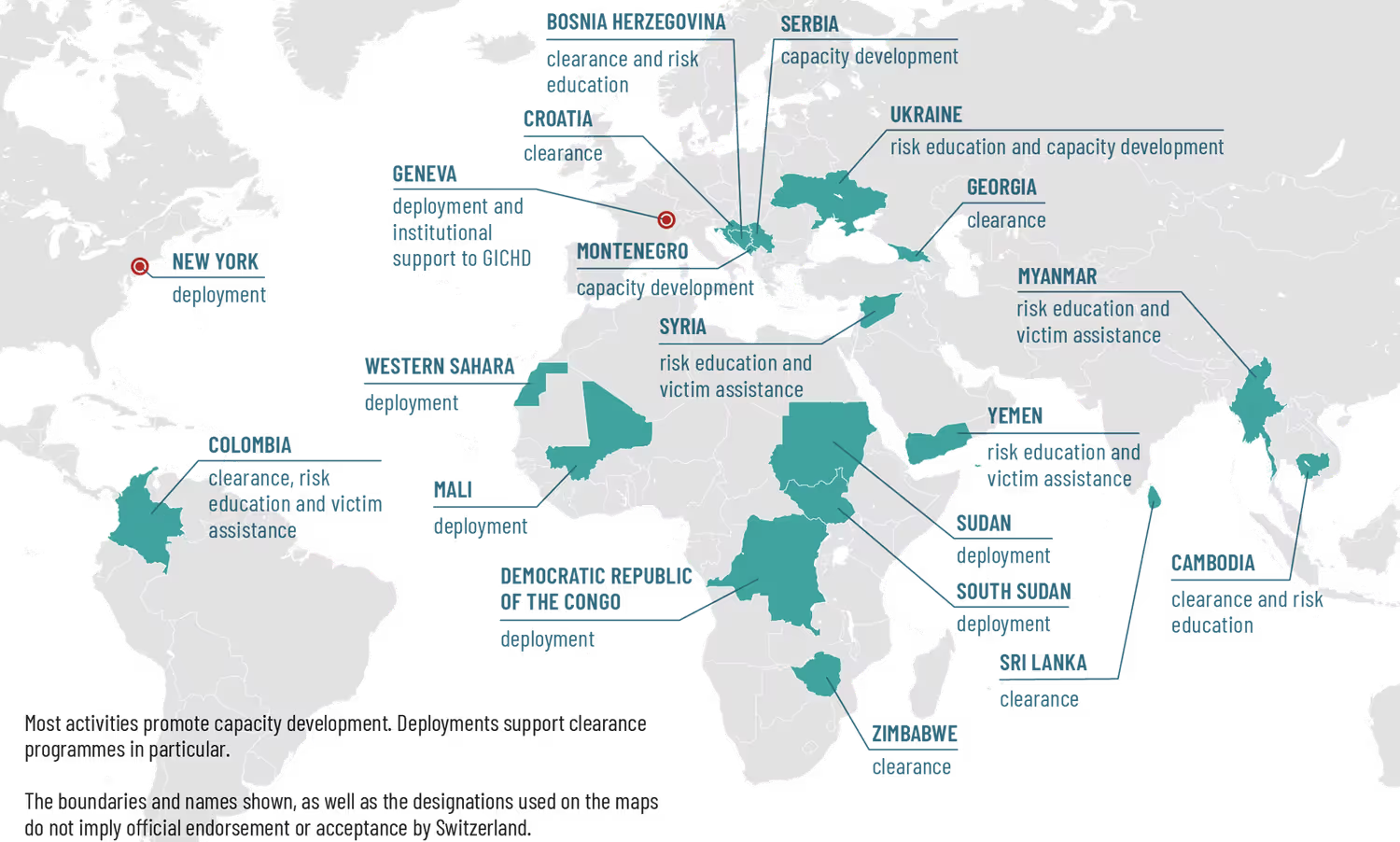
Switzerland has been involved in mine action for more than 30 years. It promotes projects in the affected states and deploys specialised military personnel. It also works at the diplomatic, legal and practical levels to ensure that the relevant conventions are universally implemented. Switzerland also created a centre of excellence benefitting the entire sector: the Geneva International Centre for Humanitarian Demining (GICHD).
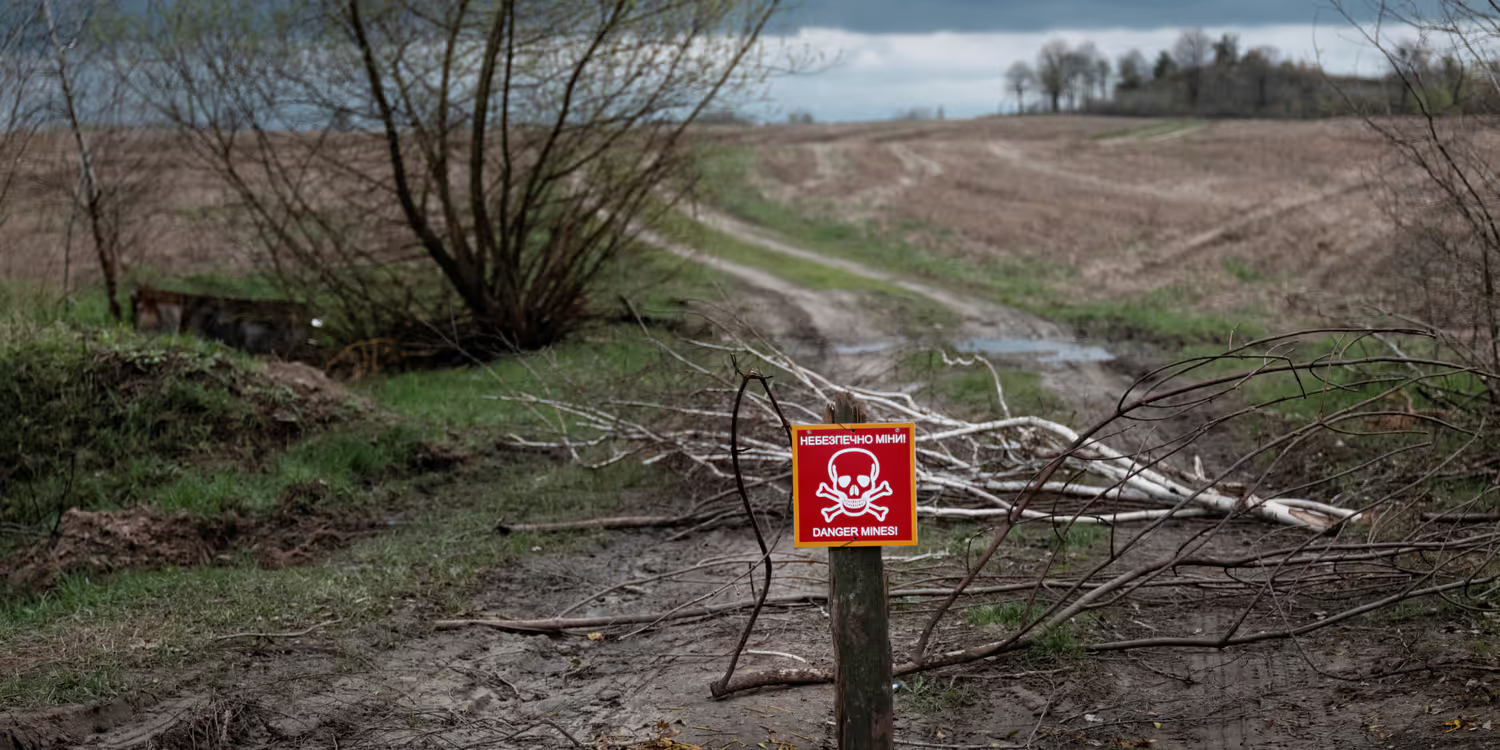
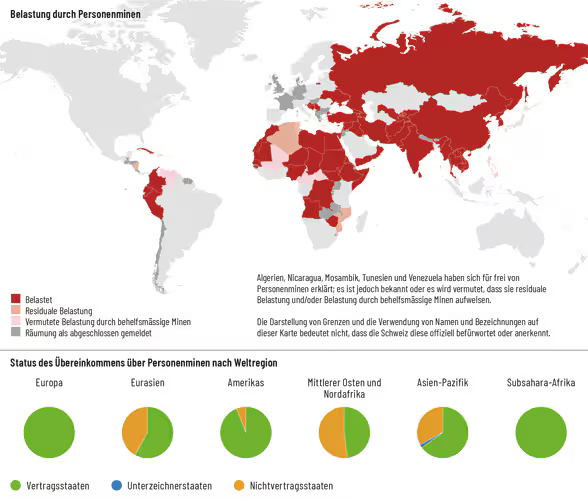
However, major challenges remain. Contamination caused by past wars still plague many countries. In addition, Russia's military aggression against Ukraine illustrates how new armed conflicts bring about new contamination. After a fall in the number of victims, marked increases have been recorded again in recent years.
Mines and other explosive ordnance cause suffering to the civilian population in particular: displaced persons cannot return to their homes, and it is impossible to cultivate fields and rebuild destroyed infrastructure. A return to normality is prevented.
Overarching goal of the action plan
Switzerland's long-term goal is a world in which people can live without the risks of mines and other explosive ordnance, thus enabling sustainable economic and social development.
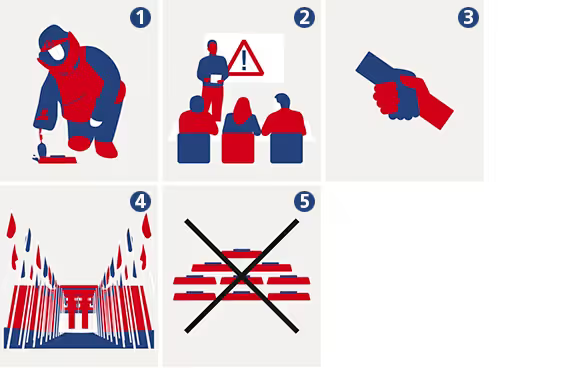
In order to realise the vision of the action plan, the FDFA and the DDPS will carry out activities in three fields of action from 2023 to 2026:
Humanitarian mine action in Ukraine
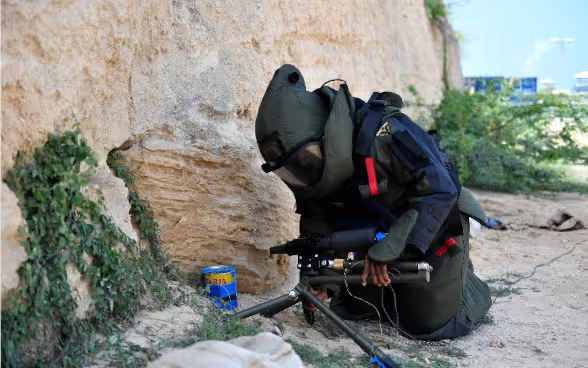
Russia's military aggression against Ukraine is causing many casualties and extensive contamination by mines and other explosive ordnance, e.g. as a result of the intensive artillery and air attacks. It has been reported that anti-personnel mines, anti-vehicle mines, booby traps and cluster munitions have also been used in Ukraine. This puts the lives of millions of people at risk.
Clearance will take many years, even with significant resources, and will be complex, partly due to the variety of munitions used and the high levels of contamination in urban areas. Nevertheless, humanitarian mine action in Ukraine is a prerequisite for the return of displaced persons, the reconstruction of destroyed infrastructure, social and economic recovery, including agriculture, and sustainable development.
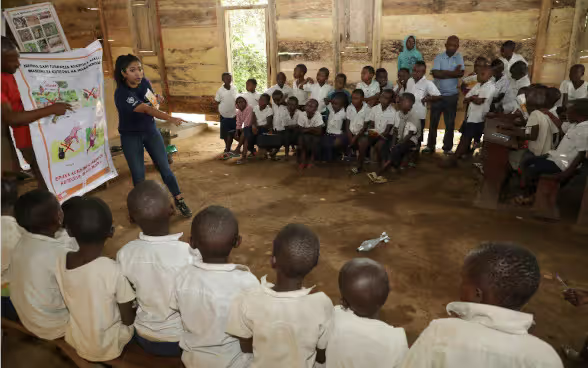
The Peace and Human Rights Division (PHRD) of the FDFA supported risk education in Ukraine through a project of the Swiss Foundation for Mine Action (FSD) in 2022 and promoted coordination in the field of mine action, in particular through an international meeting of all key actors in Geneva organised by the GICHD.
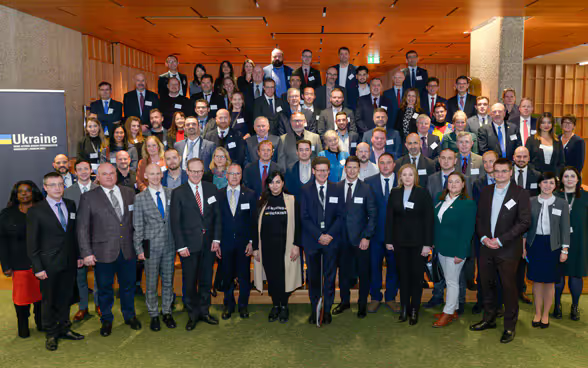
In the coming years, humanitarian mine action support for Ukraine will be expanded along various lines of action. Here, Swiss mine action expertise will be used to create specific added value with respect to Ukrainian needs.
The implementation of the action plan will pursue a holistic whole-of-government approach, taking the form of interdepartmental cooperation between the FDFA and the DDPS. For the FDFA, the PHRD will coordinate the implementation of the action plan
More foreign policy coherence
In its Foreign Policy Strategy 2020–23, published at the end of January 2020, the Federal Council set out an overarching approach, informed by an analysis of the global environment and the developments and trends likely to affect Switzerland in the years to come.
The focus areas of the Foreign Policy Strategy 2020–23 are fleshed out in the form of geographical and thematic follow-up strategies. The thematic strategies set priorities for action in their respective thematic areas. The geographical strategies detail Swiss foreign policy in the various parts of the world. With this approach, the Federal Council is strengthening the coherence of Swiss foreign policy.
The 2023–2026 Action Plan on Mine Action is a measure following up on the Arms Control and Disarmament Strategy 2022–2025.
Further information on the cascade of Swiss foreign policy strategies
Contact
General Secretariat GS-FDFA
Federal Palace West
3003 Bern