

“Openness is a basic requirement”
The application window for the FDFA's transferable careers competitive selection process opens on 22 May 2026. This three-part series has been devised to give you an overview of transferable careers. In this first article, Chasper Sarott, head of FDFA Human Resources, talks about the importance of the transfer regime and the opportunities and challenges it presents.
What surprised you the most when you joined the diplomatic service?
The quality of the staff recruited, especially from my cohort colleagues, was very impressive. All of them had incredible CVs and were already very advanced in their careers.
The transfer regime is a key aspect of transferable careers. What exactly does it entail?
First you need to understand what is stipulated in the employment contract. In principle, a transfer can be made to wherever the employer deems necessary, driven in particular by the institutional needs of the FDFA. Accordingly, from the employer’s perspective, compliance with the transfer regime is of central importance in fulfilling this mandate and effectively shaping foreign policy. In this sense, transfers initially take place largely independently of an employee’s own wishes and needs, although these are of course also taken into account as the process progresses.
From the employer's perspective, how does the FDFA manage to strike a balance between the needs of employees with their professional duties and the FDFA's own requirements?
It is indeed a balancing act. It's important for employees to be transparent and clearly express their needs. Transparency is a key prerequisite for the FDFA as an employer to be able to consider, adapt and select postings accordingly. On the other hand, employees must demonstrate sufficient flexibility. Even postings that are not on your personal wish list or are associated with difficult living conditions are part of the reality of the job.
What makes transfers particularly challenging and what are the key skills required for transferable careers?
Openness is fundamentally important. Theoretically, there should be a willingness to work for Switzerland anywhere in the world. Openness is also reflected in the level of adaptability that is required. Certain personal needs must be put on hold for a certain period of time. Due to the transfer regime, it may be necessary to accept postings that conflict with your own priorities. This openness and flexibility are basic prerequisites that must be fulfilled. At the same time, I believe it is important that when employees complete a difficult assignment, such as a deployment in a war zone, their wishes are taken into account the next time around.
Which pressures in transferable careers are often underestimated?
Managing expectations is a huge challenge. Be it the expectations that we as employees have of our employer or the demands that our personal environment makes of us.
A transferable career at the FDFA is not a profession that you can readily compare with others. Rather, it is a vocation, which means that it requires a genuine commitment and the willingness to pursue this activity in the long term. This also has an impact on our private lives, the priorities of our loved ones and the dreams of our children. This means, for example, that it is often difficult for partners of our colleagues to pursue their own careers and change jobs every three to four years. Children have to constantly change schools and circles of friends. And these circumstances naturally also affect our employees and can be stressful.
How can the FDFA as an employer support its employees and their accompanying persons?
The FDFA endeavours to support its employees in various ways, at both a personal and structural level. The primary aim is to inform them transparently about the various options. On the one hand, accompanying persons can obtain information on all transfer-related matters from our Family Office. At the same time, we endeavour to create the best possible framework conditions for our employees and their accompanying persons through agreements. Agreements already exist with around 40 countries that also give accompanying persons access to local labour markets. It is also important to be open to new, remote forms of work and to examine what options exist within the legally permissible framework to facilitate access in the future.
What advice would you give to anyone interested in the competitive selection process?
Be curious! That's the key to most challenges. As soon as we delve a little deeper into a topic, a country or a culture, our curiosity is awakened. We want to find out more and over time we start to feel comfortable in this new environment. I think that it's precisely the complete immersion in a context that makes this job so unique and enriching. That is why I call on employees to dive in and benefit from this wonderful job that enables you to discover the people of another country.
Applying for a transferable FDFA career
For the consular career (management level) and diplomatic career the application period runs from 22 May to 16 June 2026. Recruitment for the diplomatic career (profile II) will take place from 18 May to 1 June 2026.
Discover our vacancies and apply now:
Prepare for your success now – with our guide ‘How do I prepare for the competitive selection process?’:
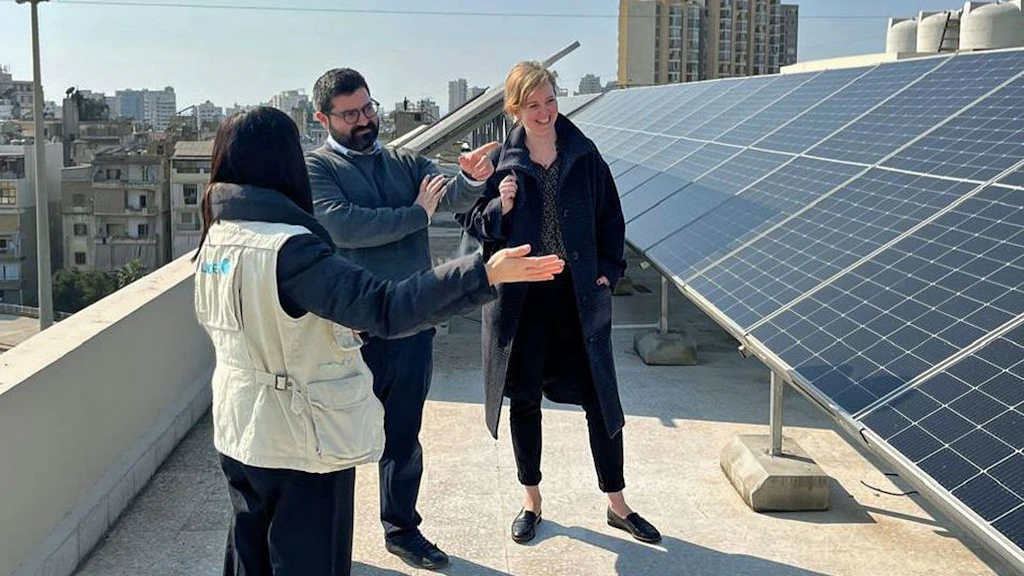
Concours 2026: “Our home has followed us”
Two FDFA employees talk about their experiences and give an insight into what it means to change your place of work and residence every three to four years.

Experienced professionals
Experienced professionals
Contact
FDFA, Directorate for corporate ressources DR
Eichenweg 5
3003 Bern