

Switzerland's various interests in Asia
The Asia G20 Strategy 2025–28, approved by the Federal Council, reflects Switzerland's diverse interests in relation to five key actors in Asia: China, India, Indonesia, Japan and South Korea. These G20 countries play a major role in the global economy and geopolitical developments. This strategy updates the China Strategy 2021–24, which proved to be a successful coordination and communication instrument.
The growing fragmentation of the international order means that Asian countries have a more crucial role to play in the global economic and security architecture. The Foreign Policy Strategy (FPS) 2024–27 underscores the need for Switzerland to diversify its international partnerships and to take account of the geostrategic interdependence between Asia and Europe. The updating of the China Strategy 2021–24 and its extension to include the five key actors – China, India, Indonesia, Japan and South Korea – will contribute to a better understanding of the regional context.
Geographical strategies
Under the Federal Constitution, foreign policy is driven by interests and values. The Federal Council fleshes out individual areas of its Foreign Policy Strategy through a series of geographical and thematic follow-up strategies. The Asia G20 Strategy updates the China Strategy 2021–24 and has been extended to include other Asian countries. The strategy is intended to highlight the diversity of Switzerland's relations with the five Asian G20 member states, to strengthen bilateral and multilateral ties, and to enable a differentiated view.
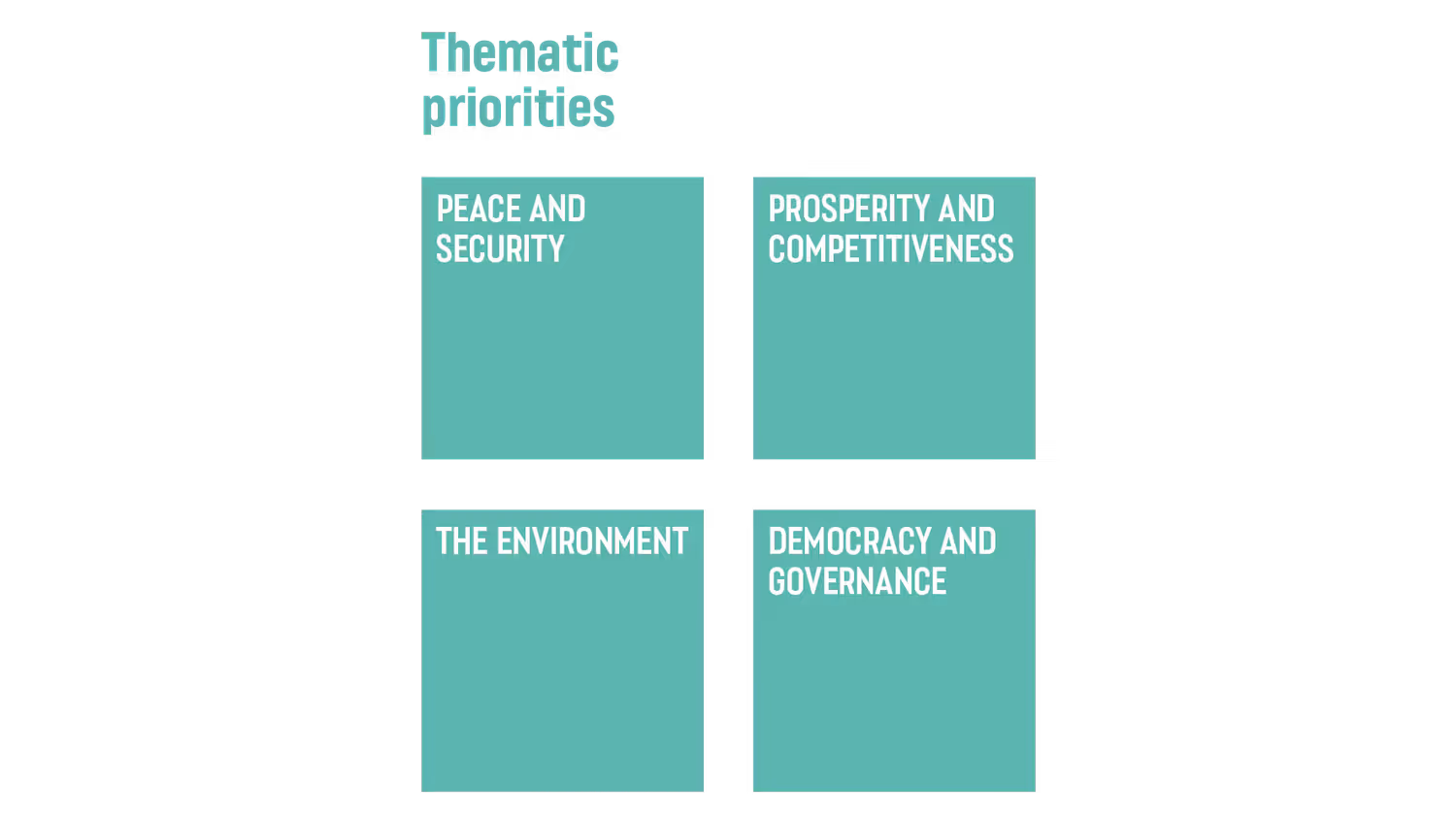
Thematic priorities
Asia is expanding its economic, security and technological capabilities and influencing global trends in terms of growth, governance and innovation. Alongside this growing potential, however, the region also faces complex problems, in particular linked to security, economic, environmental and demographic challenges. The Asia G20 Strategy 2025–28 is structured around the four priorities set out in the Foreign Policy Strategy 2024–27: peace and security, prosperity and competitiveness, the environment, and democracy and governance.
Peace and security allow prosperity and fair competition. By the same token, fair competition and social prosperity promote stable societies as competition fosters productivity, new technologies and economic growth – the basis of a prosperous society. As a member of the UN Human Rights Council in the period 2025–2027, and as host country of the World Trade Organization (WTO), Switzerland actively champions rules-based free trade and respect for human rights.
Education, research and innovation
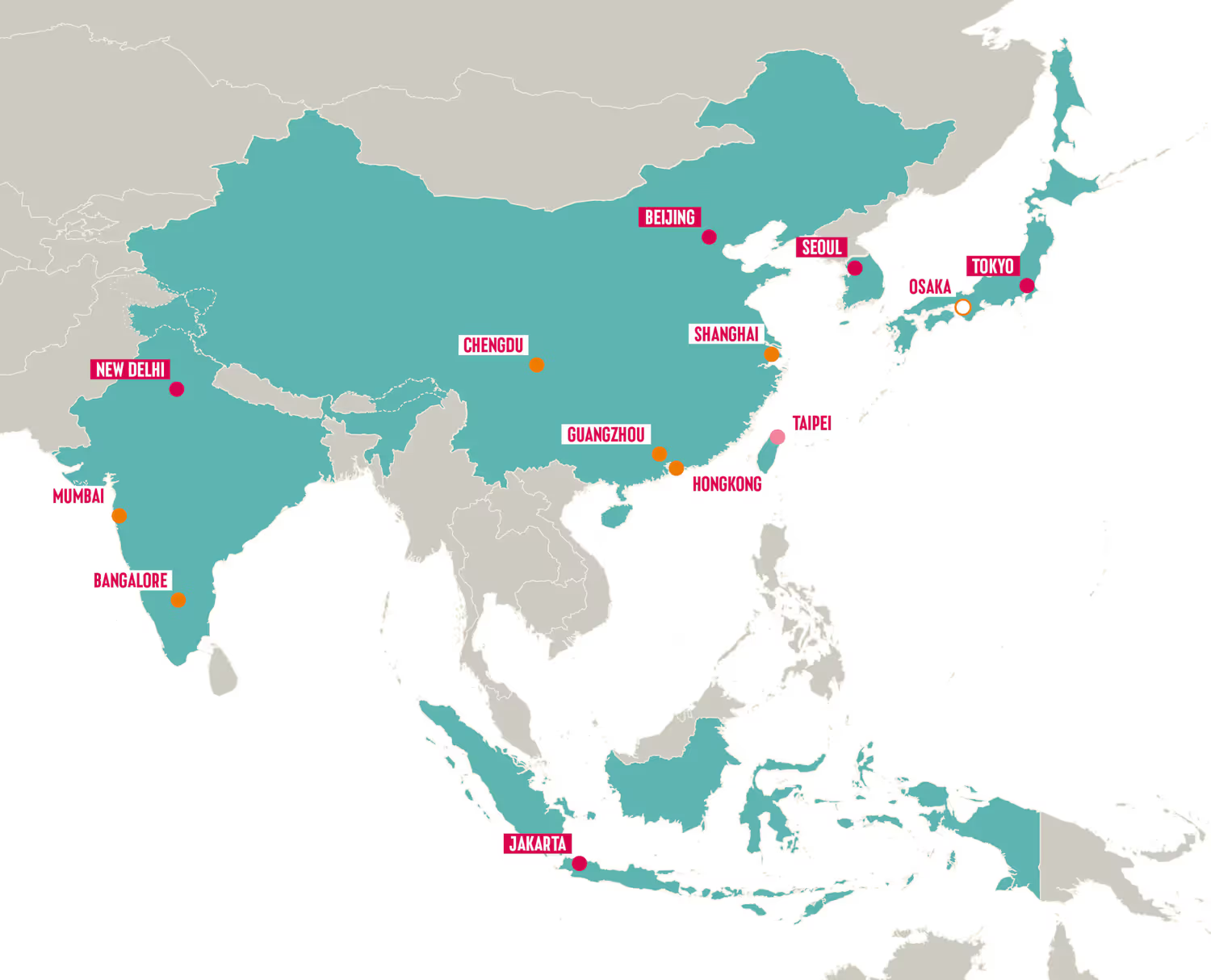
In line with its International Strategy on Education, Research and Innovation (ERI) Switzerland aims to further step up collaboration in these areas with the Asian G20 countries. The Swissnex network – the Swiss network for education, research and innovation – is particularly active in this region of the world and has a presence in China, India, Japan and South Korea. It works to enhance Switzerland's international visibility as a location for innovation and to promote partnerships in education, research and innovation. In this context, a Swiss science consulate was opened in 2023 in Osaka, the host city of Expo 2025. This is the first consulate of its type in Japan. Through its environmentally exemplary pavilion, Switzerland is showcasing its innovative capability. The Swiss pavilion is the result of a collaboration between Swissnex, the Swiss Embassy, and Presence Switzerland.
To tackle the current triple planetary crisis – climate change, biodiversity loss and pollution – and its impact, Switzerland works in multilateral and intergovernmental forums to find solutions. Environmental problems such as climate change and biodiversity loss transcend national borders. Cooperative structures between local, national and international actors are therefore needed. This is because resource scarcity and natural disasters can inflame tensions and encourage democratic regression if governance structures are not resilient enough. Through International Geneva, Switzerland has become a leading global centre on environmental policy, promoting the cooperation of over 70 environmental organisations.
Disaster risk reduction
Switzerland and Indonesia have been working together on disaster risk reduction on the basis of a memorandum of understanding since 2020. The aim is to improve the Indonesian authorities' disaster risk management capacity by providing financial and technical support. This focuses on training, early warning systems, disaster education in remote regions, and building local response capability. The cooperation combines Swiss expertise with local knowledge to sustainably strengthen resilience to natural disasters.
BNPB factsheet
Bilateral focus areas
Switzerland maintains close and varied ties with China, India, Indonesia, Japan and South Korea. They focus on trade, education, science, human rights and sustainability. This strategy updates the China Strategy 2021–24, which proved to be a successful coordination and communication instrument. An externally conducted final evaluation of the China Strategy 2021–24 (de) recommended extending the strategy to other countries in Asia. This recommendation is in line with objective 8 of the FPS 2024–27, which seeks to safeguard Swiss interests and develop partnerships in the context of geopolitical shifts. As part of the 2023–27 legislative programme, the Federal Assembly decided to update the China Strategy for the period from 2025 to 2028. All relevant actors and representatives from diplomacy, defence, migration, business, science, and cooperation were involved in the updating of the strategy in a whole of government approach.
The Asian continent is one of the most dynamic and diverse regions in the world, where the future seems to be unfolding in front of our eyes.
Multilateralism
For Switzerland, which advocates a rules-based order and strong institutions, multilateralism is crucial. As the only South East Asian member of the G20 and a new member of the BRICS group, Indonesia is bolstering its regional and global role through various partnerships, summits such as the Bali Democracy Forum, and accession discussions with the OECD. Switzerland is also developing its international ties in a targeted way: during its membership of the UN Security Council (2023–24), it enhanced cooperation with South Korea and Japan, with a focus on peace, climate security and civilian protection. Switzerland seeks to engage in dialogue with China – a key actor in the multilateral system – to discuss global challenges such as the climate, health, development and human rights.
While not a member, Switzerland attaches great importance to the G20 and endeavours to strengthen relations with its non-European members in line with objective 8 of its FPS 2024–27. As a guest country in the Finance Track and an active participant in the Sherpa Track, Switzerland contributes to working groups on topics such as the climate, trade, research and health, and aligns with the G20's key goals such as combating climate change and promoting sustainable development.
Against this backdrop, the five Asian G20 members play an increasingly pivotal role in the global economic and political order. The Asia G20 Strategy combines elements from the foreign economic policy strategies, the International Cooperation Strategy, the Guidelines on Democracy and many other areas.
G20: Finance Track and Sherpa Track
The G20, which does not have a permanent secretariat, is based on an alternating presidency which determines its annual priorities. The G20's work is split into two main areas: the Finance Track, in which finance ministers and central banks deal with economic and monetary issues, and the Sherpa Track, which addresses a broad range of other global issues such as the climate, trade, research and innovation, and health.
FDFA Communication
3003 Bern