

Tradition and principles of humanitarian mine action in Switzerland
Switzerland has been providing political and financial support for humanitarian demining activities for more than two decades. Many dedicated organisations are based in Geneva. They support countries and populations in the fight against landmines. At the Ukraine Recovery Conference 2023, Federal Councillor Ignazio Cassis took part in a panel discussion on humanitarian demining on 22 June. What is Switzerland doing in this area?
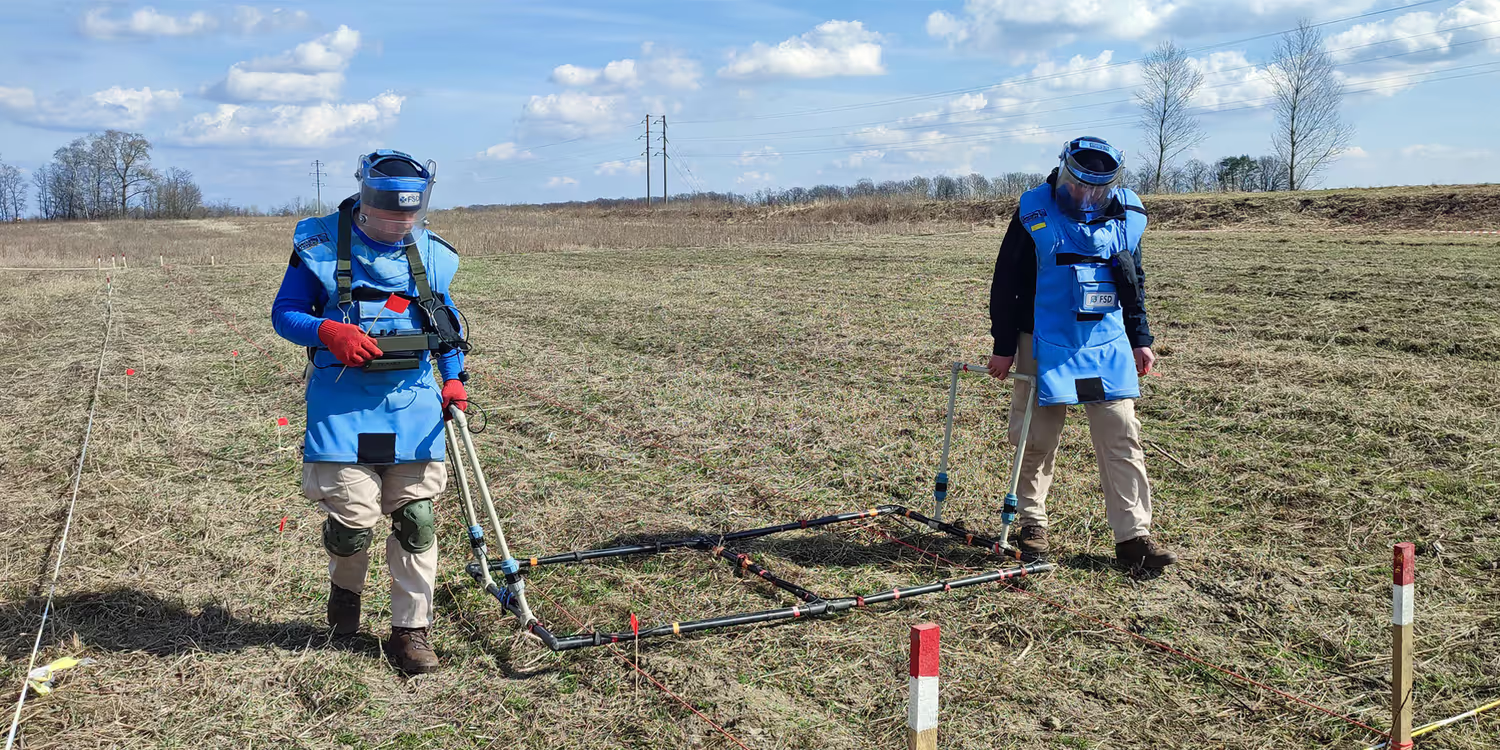
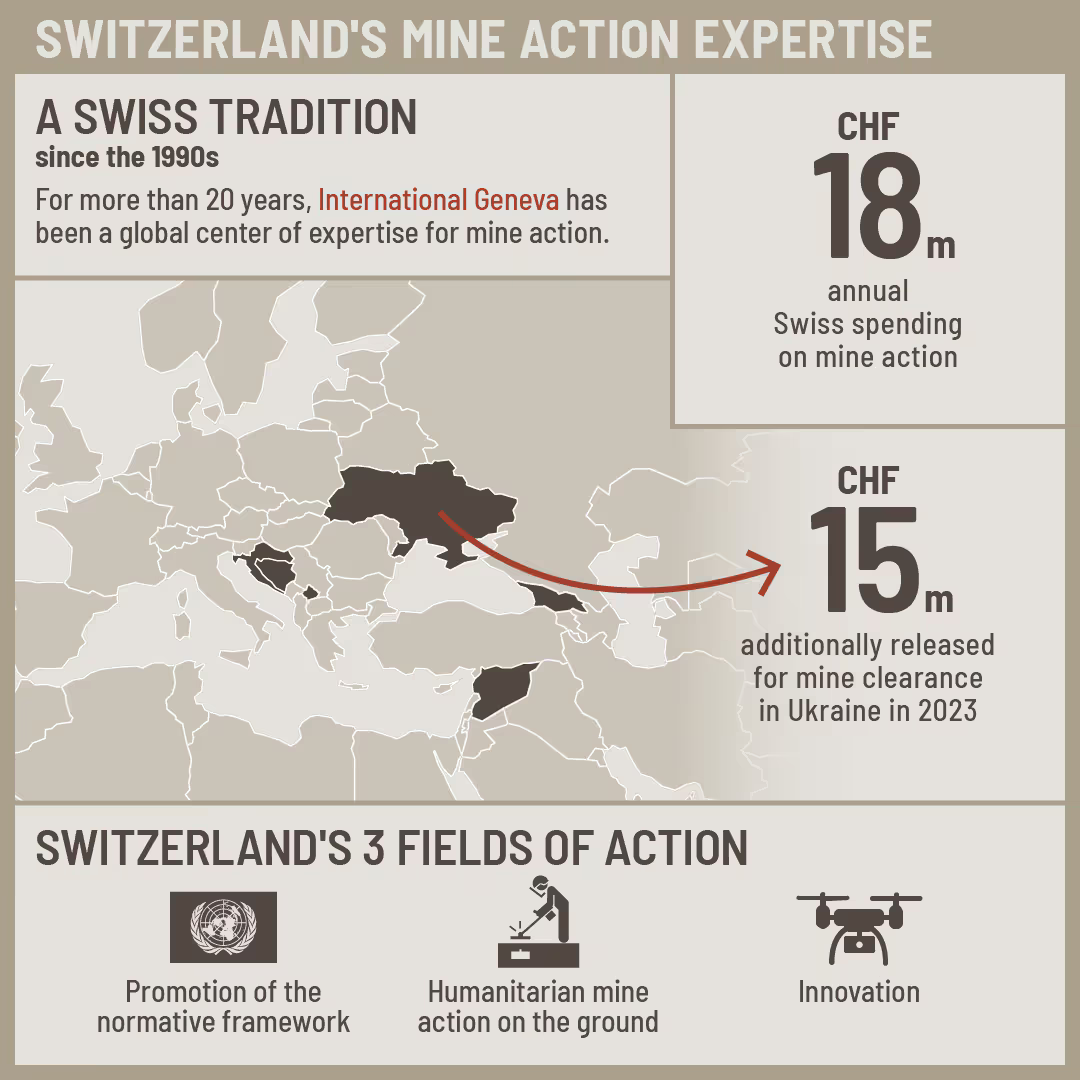
Switzerland has supported humanitarian mine action efforts in the international community for over 20 years. It is thanks to Swiss efforts that the three Geneva centres – the Geneva Centre for Security Policy (GCSP), the Geneva Centre for Security Sector Governance (DCAF) and the Geneva International Centre for Humanitarian Demining (GICHD) – were established in the 1990s. Over three decades, with the aid of various strategic partners, the centres have developed a solid knowledge base that today serves the many needs of countries around the world. The GICHD is a globally recognised centre of mine action expertise. Thanks to Switzerland's support, it can provide annual training courses to share this knowledge with the countries and people most closely involved in mine action.
Find out more about the activities of the Geneva International Centre for Humanitarian Demining (GICHD) and the Swiss Foundation for Demining (FSD):
Switzerland has always fought for the protection of civilians and the promotion of international humanitarian law, and is currently prioritising these principles during its term on the UN Security Council. Humanitarian mine action is central to this commitment. In countries affected by conflict, mine action is a basic prerequisite for long-term reconstruction.
International agreements
The last 25 years have seen the signing of some major international agreements, including the
Anti-Personnel Mine Ban Convention and the Oslo Convention on Cluster Munitions. More than thirty countries have completed operations to eliminate anti-personnel mines and ten have eliminated their remaining stocks of cluster munitions.
The Ottawa Convention (anti-personnel mine ban)
The convention adoped in 1997 prohibits the use, production, stockpiling and transfer of anti-personnel mines. It has been ratified by over 160 states, which have undertaken to destroy their stockpiles of anti-personnel mines within four years of ratifying the convention and all anti-personnel mines in their territories within ten years. Switzerland was one of the first countries to ratify the convention in March 1998. It destroyed its last stocks of anti-personnel mines in 1999.
Oslo Convention (cluster munition ban)
The convention adopted in 2008 bans the development, production, use, transfer and stockpiling of cluster munitions. Over 100 countries have ratified it to date. Switzerland ratified the convention in July 2012. Following ratification, Switzerland adapted its federal law on war materiel and undertook the neccessary action to destroy its own stockpiles by 2018.
Why is mine action necessary?
Mines and other explosive ordnance remain active for decades after hostilities end. The devices contaminate vast areas and are a grave threat to local communities. Accidents involving anti-personnel mines take the lives of many people, including children.
Mine action also helps mitigate the social, economic and environmental consequences of mines and other explosive ordnance. That is why in addition to mine clearance, it is important to invest in educating people about the risks, supporting victims and advocating for the prohibition of anti-personnel mines and cluster munitions.
What organisations does Switzerland work with?
To carry out its humanitarian mine action activities, Switzerland funds and works closely with various strategic partners. The GICHD and Swiss Foundation for Mine Action (FSD), also based in Geneva, are the two main organisations. Switzerland enjoys a high level of credibility at international level thanks to these two organisations, which have been operating worldwide for 25 years. This helps to strengthen International Geneva's position as the main global hub for disarmament and global governance. Geneva's international status is also important in helping to connect the dots between foreign and domestic policy in Switzerland.
FSD experts work in the field to destroy anti-personnel mines and explosive ordnance and directly support communities affected by armed conflict and instability. The GICHD combats the proliferation of landmines, cluster munitions and the stockpiling of munitions. Every year, it supports around forty affected countries and territories.
Which federal government departments are involved in humanitarian mine action?
Switzerland takes a whole-of-government approach to mine action. The activities to implement the Mine Action Plan 2023–26 are a collaborative effort of the FDFA and the DDPS.
Within the FDFA, the Swiss Agency for Development and Cooperation (SDC) is responsible for victim support, mine prevention and the development of local capacities. The Peace and Human Rights Division (PHRD) focuses on mine clearance projects and funds mine action organisations recognised by Switzerland and by the international community. The FDFA also plays a leading role in the political arena.
The DDPS seconds specialists from the Swiss Armed Forces to UN mine action programmes. The seconded personnel travel to affected areas to build capacity among local communities, in close contact with several groups of mine clearance experts, and to pass on the knowledge needed to maintain the efforts in the long term. The DDPS has presented the SESU, Ukraine’s civilian emergency service, with a demining machine developed and manufactured by the Swiss Digger Foundation. The machine is a remote-controlled caterpillar vehicle the size of a small bulldozer. It can destroy or detonate anti-personnel mines with a cutter, rendering them harmless.
How much Swiss funding goes to mine action?
Every year, Switzerland spends between CHF 16 and 18 million on mine action. It is one of 15 major donors worldwide. A large part of the funding goes to GICHD training programmes (CHF 9.5 million each year). The funding is allocated on the basis of the framework credit providing ongoing support for the three Geneva centres for 2020–23. Switzerland contributes around 50% of the GICHD's budget.
The Mine Action Plan includes an additional budget for Ukraine. Humanitarian mine action in Ukraine requires long-term commitment. For the 2023–28 period, around CHF 150–200 million of Switzerland's international cooperation framework credit has therefore been earmarked for Ukraine support efforts.
Links
- Press release, 22.06.2023 – Ukraine Recovery Conference 2023: Federal Councillor Ignazio Cassis calls for continued support for Ukraine recovery based on Lugano Principles
- Press release 22.06.2023 – Humanitarian demining: DDPS presents Ukraine with remote-controlled demining machine
- Adress by federal counsillor Ignazio Cassis 22.06.23 - Panel on humanitarian demining in Ukraine / URC 2023
- War against Ukraine – measures taken by the Confederation since 24 February 2022
- Mine action in Ukraine: Road to Geneva 2024
- Geneva International Centre for Humanitarian Demining (GICHD)
- «60 million people live with the threat of explosive ordnance in their daily lives», interview with Stefano Toscano, director GICHD
- Swiss Foundation for Demining (FSD)
- «We have tripled our workforce in Ukraine since 2015», interview with Hansjörg Eberle, director FSD
Documents
Contact
General Secretariat GS-FDFA
Federal Palace West
3003 Bern